

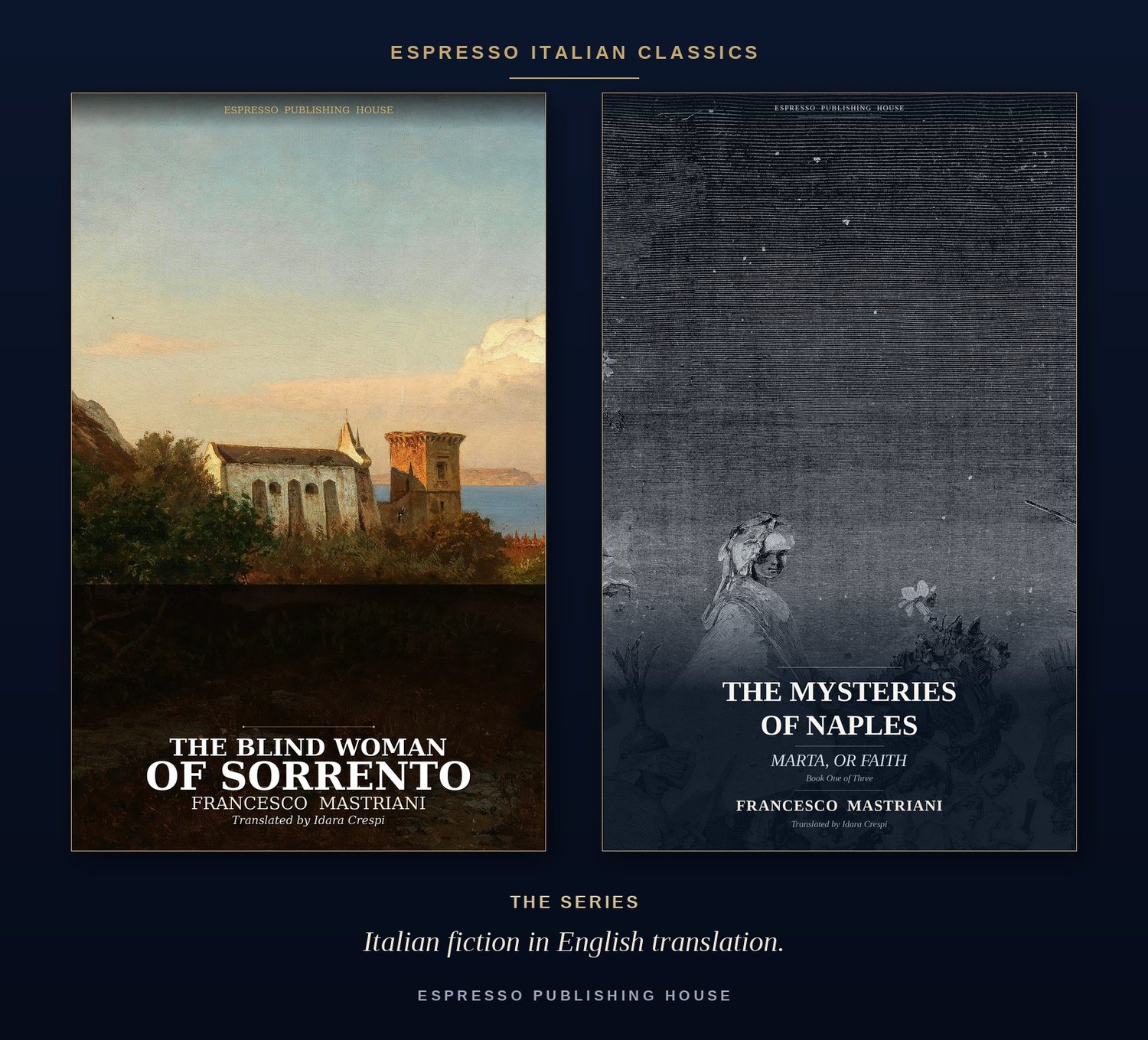
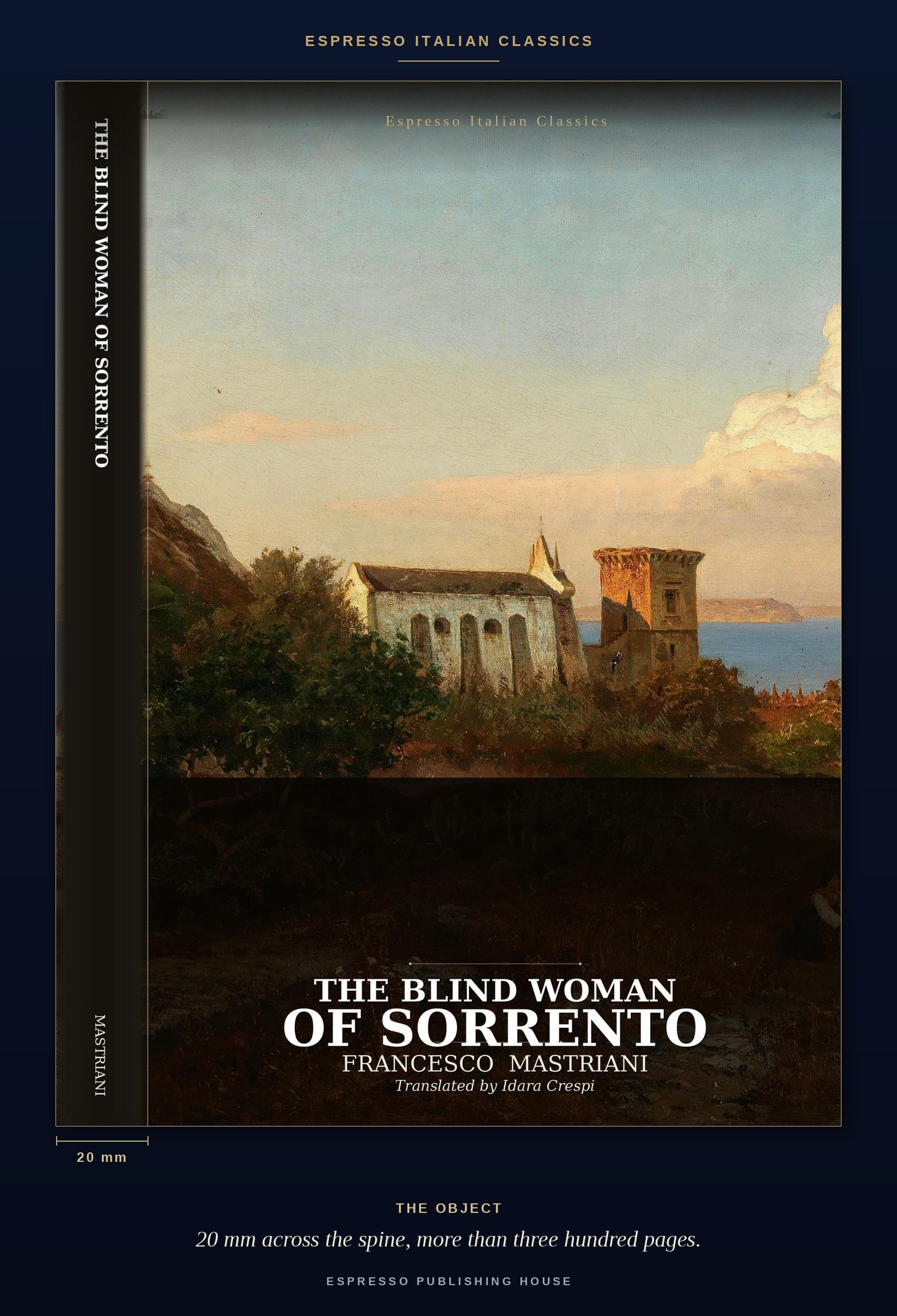
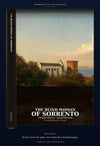
The Blind Woman of Sorrento
A Gothic masterwork of nineteenth-century Naples. We can trace no English translation of it before ours.
Naples, 1840. In the anatomy hall of the Hospital for the Incurables, a young medical student stands over his dead sister's body and makes a vow. What follows is one of the most gripping novels of the Italian Romantic era: a story of hidden identity, buried crimes, a blind woman of extraordinary perception, and a city where justice moves slowly but with terrible force.
Beatrice Rionero has been blind since childhood, raised by her widowed father in a villa above the Bay of Sorrento. When a mysterious foreign physician, Dr. Oliviero Blackman, arrives, he claims to offer her the chance of sight. But Blackman is not what he appears. And neither is anyone else in this labyrinthine story of secrets, vengeance, and redemption.
Francesco Mastriani (1819–1891) was the great chronicler of Neapolitan society, a writer who worked in the tradition of Eugène Sue, whose serialized fiction drew enormous popular audiences while unflinching in its portrait of class, injustice, and the hidden lives of the poor. La Cieca di Sorrento (1852) is his best-known novel: a work of Gothic sensation and moral seriousness, vivid and at times harrowing in its depictions of injustice and violence, set in the streets and drawing rooms, courtrooms and catacombs of nineteenth-century Naples.
Translated by Idara Crespi. Mastriani's Naples is a city of declarative rhythms and operatic emotional peaks, of dark comedy running alongside its horrors, and of social attitudes and hierarchies of class and gender that belong to 1840.
For readers of Wilkie Collins, Eugène Sue, and Alexandre Dumas.